What Are Stablecoins (USDT, USDC): How They Work, What They Are For and the Risks
What stablecoins are, how they hold a stable price, the difference between USDT and USDC, what they are used for, what the risks are (loss of the peg, the issuer) and how they are regulated in the EU.
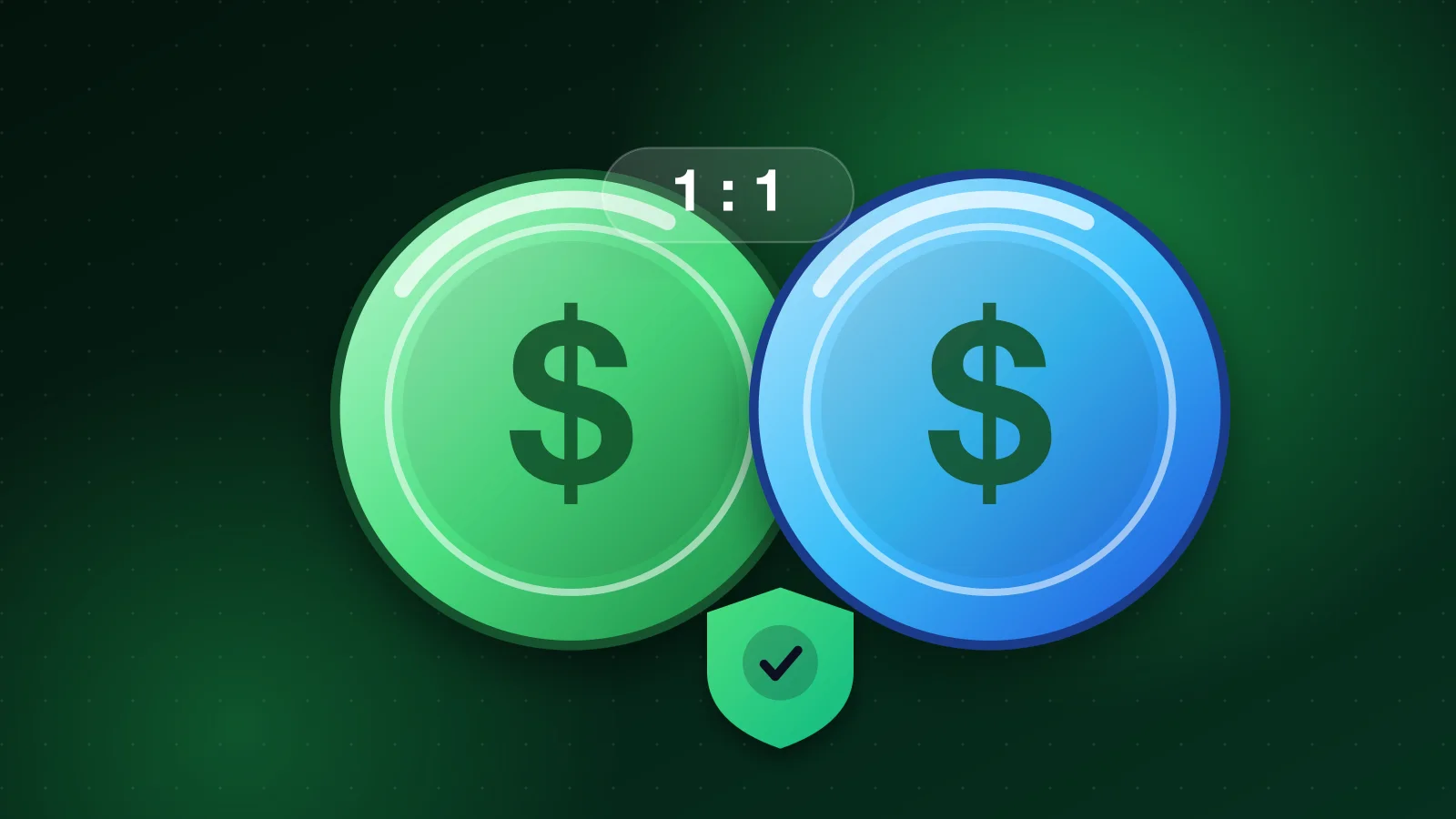
In short: a stablecoin is a cryptocurrency pegged to a stable value, most often the US dollar (1 token ≈ 1 USD). It is used to move money between exchanges, for trading and to "park" value without Bitcoin's swings. They are not risk-free: the issuer can fail or the token can drift away from its price.
How stablecoins work
A stablecoin is meant to keep a stable price. There are different ways to do it:
- Backed by fiat currency. The issuer holds reserves (cash, short-term government bonds) and promises to pay out one dollar for each token. This is how USDT and USDC work.
- Backed by cryptocurrencies. The backing is an over-collateralized basket of crypto assets.
- Algorithmic. A program and incentives hold the stability, without fixed reserves. This type is the riskiest and some have failed in the past, for example TerraUSD in 2022.
USDT vs. USDC
| USDT (Tether) | USDC (Circle) | |
|---|---|---|
| Peg | 1 USD | 1 USD |
| Adoption | largest trading volume | second largest |
| Transparency | historically criticized | regular reserve reports |
| Use | trading, transfers | trading, DeFi, payments |
The current market caps and peg history of the biggest stablecoins are in our Tether and USD Coin pages, in the "in depth" view.
What they are used for
- moving money between exchanges and wallets, quickly and cheaply,
- trading, where cryptocurrencies are bought with a stablecoin,
- storing value during a market fall without converting to fiat currency,
- DeFi loans and liquidity,
- international payments.
Risks
- Loss of the peg (depeg). The price can drift from 1 USD. It happened briefly even to large tokens during banking problems in 2023.
- Issuer risk. If the reserves are not of good quality or transparent, there is a risk of problems with redemption.
- Regulation. In the EU the MiCA rules apply, under which some stablecoins were restricted on regulated exchanges.
- No yield from holding. Merely holding usually earns no interest. A promised high yield is a warning, see How to spot a crypto scam.
- Inflation. The dollar loses purchasing power.
Taxes
Stablecoins may be taxed differently from other cryptocurrencies depending on your country, for example where small gains are exempt. Check the rules where you live.
Where to buy them
Stablecoins are available on most exchanges. The offer differs from exchange to exchange and by regulation.
Frequently asked questions
Are stablecoins safe?
They are more stable than other cryptocurrencies, but not risk-free. It depends on the issuer, the reserves and regulation.
Can I earn money with stablecoins?
Holding alone yields nothing. Some services promise interest, but it comes with platform risks.
Is USDC safer than USDT?
They differ in transparency and regulation, but neither is risk-free. There is no guarantee that either stays pegged to 1 USD.
Can I exchange stablecoins for fiat currency?
Yes, through an exchange. Keep fees and tax consequences in mind.
For information only, not investment advice. Cryptocurrencies are risky.