What Is an ETF and How Does It Work: A Simple Explanation for Beginners
What an ETF is, how it works, its advantages and risks, how it differs from a stock and a mutual fund, and how to pick a first ETF. A clear introduction for beginners.
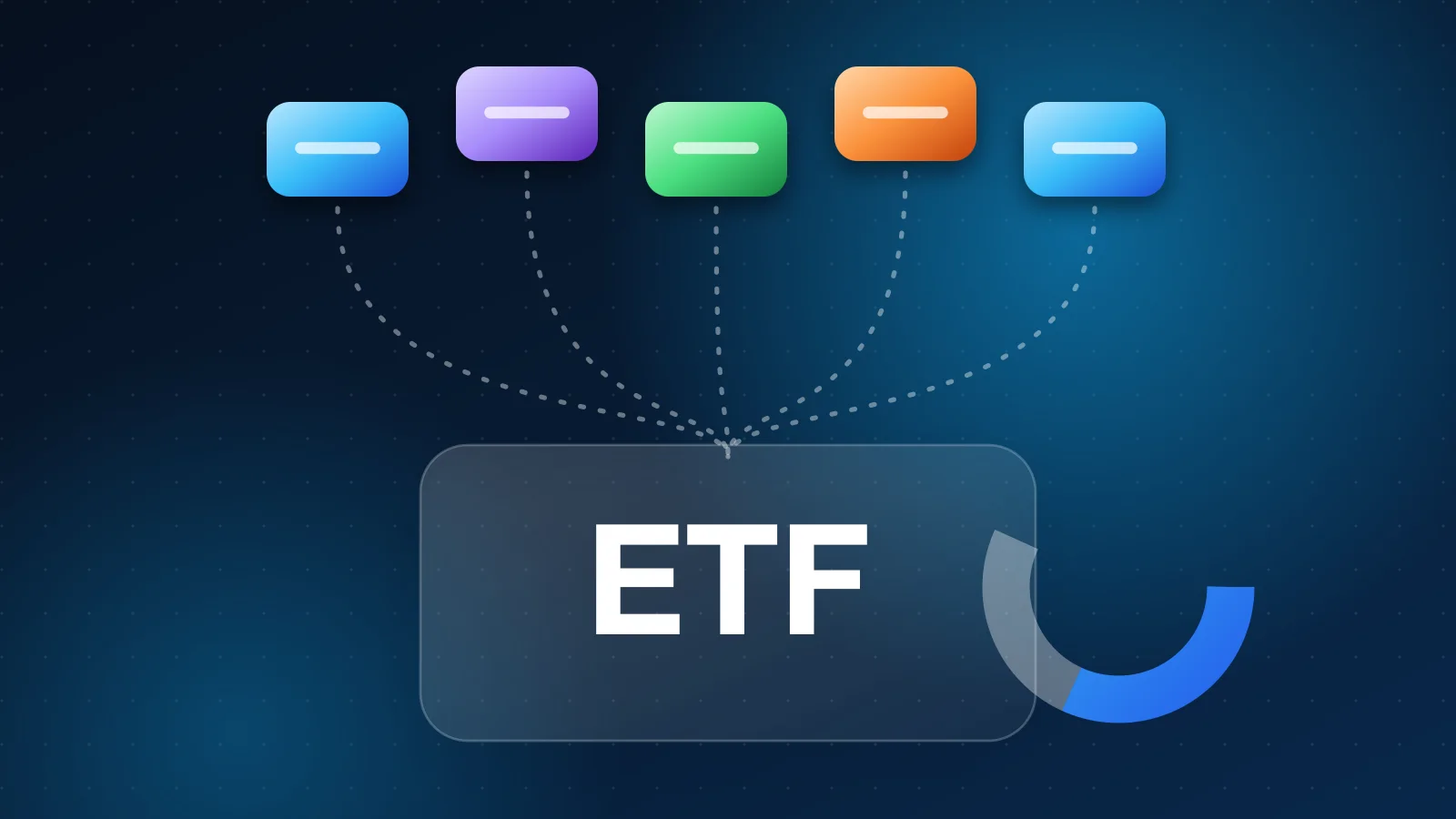
In short: an ETF (exchange traded fund) is a fund that is traded on an exchange like a stock. It usually tracks an index, for example the S&P 500 or the whole world. With one purchase you get a share in dozens to thousands of companies, at low cost. But its value fluctuates with the market.
How an ETF works
The fund manager buys the stocks (or other assets) that make up a certain index and issues shares that are traded on an exchange. When the index rises, the value of a share rises too. An ETF tries to track the index, not to beat it, which is why its fees are low.
ETF vs. stock vs. mutual fund
| Stock | ETF | Actively managed fund | |
|---|---|---|---|
| What you buy | a share in one company | a share in many companies | a share in a fund with a manager |
| Risk spread | low | high | medium to high |
| Fees | broker fee | low TER | usually higher |
| Trading | on an exchange | on an exchange | through the manager |
Advantages
- Diversification. One purchase spreads the risk across many companies.
- Low fees. The annual TER of broad funds is often a few tenths of a percent.
- Simplicity. One or two funds can be enough.
- Liquidity. You can sell at any time during exchange trading hours.
Risks
- Market risk. When the market falls, so does the ETF. It can be by tens of percent.
- Currency risk. A fund in dollars or euros also moves with the exchange rate of your own currency.
- Specific risks. Thematic and leveraged ETFs are considerably riskier. Leveraged and inverse funds are not for beginners.
Accumulating or distributing
An accumulating ETF reinvests the dividends of the companies in the fund, so the value of a share grows. A distributing ETF pays them out. They are taxed differently in many countries, so check the rules where you live.
How to pick a first ETF
- Choose an index: the world, the US or Europe.
- For European investors, choose a UCITS accumulating fund with a low TER.
- Compare the specific funds on the same index by cost, size and how they track the index.
- Open an account with a broker and buy regularly.
What an ETF actually contains
An S&P 500 ETF holds the stocks of the 500 largest American companies in proportion to their size. Bigger companies have a bigger weight in the index, so they influence the fund's performance the most. A world ETF contains thousands of companies from many countries. The exact composition is in the KID document and on the fund's page.
How to read a fund's factsheet
- Index: what the fund tracks (world, US, Europe).
- TER: the annual fee. The lower the better for the same index.
- Accumulating or distributing: reinvestment or payout of dividends.
- Fund size: a larger fund tends to be more stable and have a narrower spread.
- Domicile: most often Ireland or Luxembourg, which affects the taxation of dividends inside the fund.
- Replication: physical (it really holds the stocks) or synthetic (a swap).
Common myths
- "An ETF is risk-free." It is not. It tracks the market, so it falls when the market falls.
- "The more ETFs, the safer." Many funds overlap, so another one only adds complexity. See Portfolio diversification.
- "A dividend ETF is always better." Paying dividends lowers the share price, so total return does not have to be higher.
- "I have to pick the best day to buy." A long-term investor can simply buy regularly.
Frequently asked questions
Is an ETF a safe investment?
It is more diversified than a single stock, but not risk-free. Its value fluctuates with the market and you can lose part of your investment.
How much does investing in an ETF cost?
You pay the fund's annual fee (TER) and any broker fees for trading and currency conversion.
What is TER?
Total expense ratio: the fund's total annual cost as a percentage of the invested amount. It is already included in the share price.
How much money do I need to start?
With fractional purchases, with many brokers you can start with a small amount.
Is it better to buy ETFs or individual stocks?
For most beginners ETFs are simpler and less risky. Individual stocks need more time and knowledge.
For information only, not investment advice. Investing is risky and you can lose part or all of your investment.