What Is Forex and How Does Currency Trading Work: An Introduction for Beginners
What forex is, how currency pairs are traded, what a pip, a spread and leverage are, who sets the rates and what the risks of currency trading are.
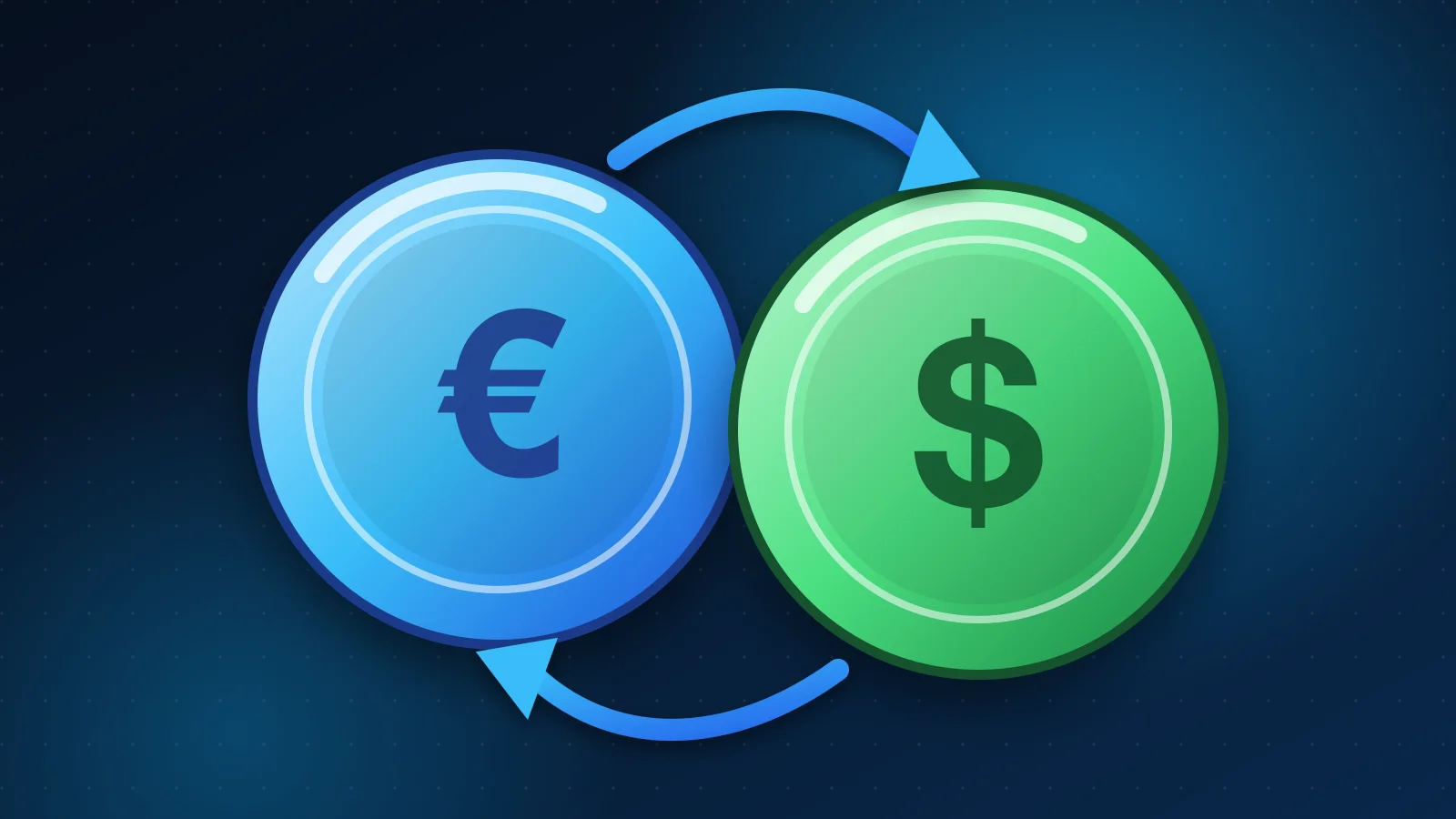
In short: forex is the world's largest market where currencies are exchanged. It is traded in pairs (for example EUR/USD) and profit comes from a change in the exchange rate. For small traders it is risky mainly because of leverage. As a long-term investor you do not need forex, but exchange rates affect foreign investments and travel.
What forex is
Forex (foreign exchange) is the market for currencies. It runs around the clock from Monday to Friday and is joined by banks, companies, funds and small traders. Rates arise from the clash of supply and demand and are influenced by interest rates, inflation, economic data and politics.
Currency pairs
Currencies are traded in pairs. In EUR/USD the euro is the base currency and the dollar the quote currency. A rate of 1.10 means that one euro costs 1.10 dollars. The major pairs include the dollar and the most traded currencies: EUR/USD, GBP/USD, USD/JPY and others.
Basic terms
- Pip. The smallest usual change in a rate, for most pairs the fourth decimal place.
- Spread. The difference between the buy and sell price, the main cost of a trade.
- Leverage. It lets you trade with more than your capital and multiplies both profits and losses.
- Lot. A standardized trade size.
How a trader profits (and loses)
You buy the base currency if you expect it to strengthen, or sell it if you expect it to fall. The profit or loss depends on the change in the rate and the size of the position. Most forex trading takes place through CFDs, see What is a CFD, and therefore with leverage and high risk. Most small traders lose money over the long term.
Why a rate moves
- Central bank interest rates. Higher rates usually support a currency.
- Inflation and economic growth.
- Political stability and geopolitics.
- The trade balance and capital flows.
Rate decisions of the Fed are explained on our FedWatch page.
Forex for a long-term investor
If you invest in foreign stocks or ETFs, the exchange rate of your own currency affects your return in that currency. Diversification helps against currency risk, see Portfolio diversification.
If you want to start
- Try a demo account without real money.
- Choose a regulated broker.
- Use low leverage and a stop-loss.
- Risk only money you can afford to lose.
Frequently asked questions
Is forex gambling?
Without knowledge, a plan and risk management it often behaves that way. Most small traders lose money, especially with high leverage.
How much money do I need to start?
Brokers let you start with a small amount, but a small capital with high leverage is very risky.
Can I trade forex without leverage?
Yes, but the profits are smaller. For long-term holding of currencies the most common approach is a simple exchange or an account in a foreign currency.
For information only, not investment advice. Leveraged trading is highly risky.