What Is a Bear Market and How Long Does It Last: S&P 500 and Bitcoin History
What a bear market is, how it differs from a correction, how deep and how long the bear markets of the S&P 500 since 1970 and of Bitcoin were, how long the return to the high took and how to approach declines.
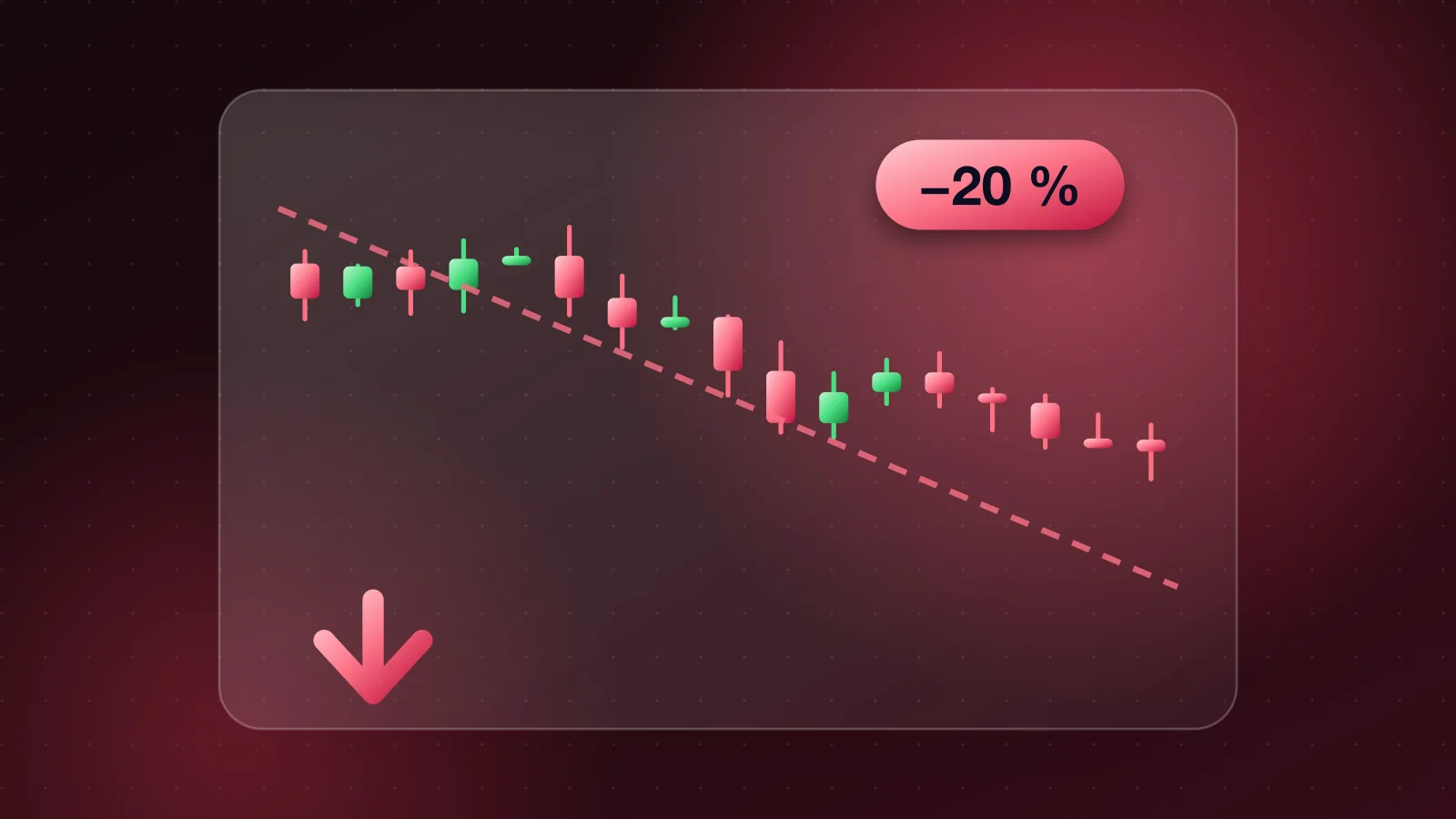
In short: a bear market is a fall of 20% or more from the last high. For the S&P 500 there have been seven since 1970, with a median fall of about 34%, roughly a year and a half to the bottom, and a median of about 20 months from the bottom back to the old high. For Bitcoin the falls are deeper (53 to 83%) but shorter. A bear market is only recognised in hindsight.
What a bear market is and what a correction is
- Correction: a fall of 10 to 20% from the high.
- Bear market: a fall of 20% or more from the high.
- Bull market: a long-term rise, typically after the bottom of a bear market.
The 20% threshold is a convention, not a law of nature. For this article we calculate it from daily closing prices: the fall from the highest close to the lowest close before the market surpasses the old high.
S&P 500 bear markets since 1970
| High | Bottom | Fall | Duration of the fall | From the bottom to the old high |
|---|---|---|---|---|
| January 1973 | October 1974 | −48.2% | 21 months | 5.8 years |
| November 1980 | August 1982 | −27.1% | 20 months | 3 months |
| August 1987 | December 1987 | −33.5% | 3 months | 20 months |
| March 2000 | October 2002 | −49.1% | 2.5 years | 4.6 years |
| October 2007 | March 2009 | −56.8% | 17 months | 4.1 years |
| February 2020 | March 2020 | −33.9% | 33 days | 5 months |
| January 2022 | October 2022 | −25.4% | 9 months | 15 months |
Source: daily closes of the S&P 500 index (Yahoo Finance), our own calculation. This is not total return with dividends.
Several things follow from the table:
- The depth varies. The shallowest fall was 25%, the deepest almost 57%.
- The speed varies even more. In 2020 the market fell by a third in 33 days and recovered in five months, whereas after 2000 it took almost five years.
- Nobody recognised the bottom in advance. The market's best days often come right after its worst ones, so the bottom cannot be reliably hit.
Bitcoin bear markets
| High | Bottom | Fall | Duration of the fall | From the bottom to the old high |
|---|---|---|---|---|
| December 2017 | December 2018 | −83.4% | 12 months | 23 months |
| April 2021 | July 2021 | −53.1% | 3 months | 3 months |
| November 2021 | November 2022 | −76.6% | 12 months | 15 months |
| October 2025 | June 2026 | −53.1% | 9 months | not yet |
For cryptocurrencies we list only falls of 40% or more, because smaller swings are normal. We have Bitcoin data since September 2014, so we do not list earlier drops. The current distance from the high and the development are on the Bitcoin page.
Why the recovery is harder than the fall
After a 50% fall, earning 50% is not enough, you need 100%. The percentages are calculated from a different base. The formula is 1 / (1 − fall) − 1: a 20% fall requires a 25% gain, a 33% fall a 50% gain and an 80% fall a 400% gain.
How to tell that a bear market is coming
You cannot tell exactly. Investors watch several signals, which however often warn falsely or late:
- Fall from the high: 10% is a correction, 20% is by definition a bear market.
- Price below the 200-day average: the long-term trend is changing.
- Death cross: the 50-day average fell below the 200-day. It is a lagging signal.
- VIX: the fear index of the US market. Persistently above 30 is usually panic.
- Inverted yield curve: short-term rates are higher than long-term ones. In the US it preceded most recessions, but with a lag of months to years. See US Treasury yields.
What to do about it as an investor (in general)
- Money you will need soon does not belong in the stock market. Declines are normal and a forced sale at the bottom locks in the loss.
- Regular investing (DCA) does not require hitting the bottom and buys cheaper during a decline.
- Diversification reduces the depth of a portfolio's drop, see Portfolio diversification.
- Defensive elements: cash, savings accounts and bonds, or gold. Even these do not guarantee a profit and behaved differently in different periods.
- Bets on a fall (shorts, CFDs, inverse ETFs, options) are very risky for most people. The market can still rise before it falls, and leverage can knock you out before the bet pays off. With CFDs brokers themselves state that most retail accounts lose money.
Taxes on losses
Whether a loss from selling securities can be offset against gains, and whether it can be carried forward, depends on your country. Check the rules where you live or ask a tax adviser.
Frequently asked questions
What is a bear market?
A fall of a market or an asset of 20% or more from its last high.
How long does a bear market last?
For the S&P 500 since 1970 the fall from the high to the bottom lasted from 33 days (2020) to about 2.5 years (2000 to 2002). The median is about 17 months. The time to return to the old high from the bottom ranged from a few months to almost six years.
Is a bear market the same as a recession?
No. A bear market is a fall in prices on a market, a recession is a fall in economic activity. They often coincide, but not always. For example in 2022 stocks fell sharply even though the US NBER did not declare a recession.
Is a bear market a good time to buy?
Long-term investors have often bought successfully during declines, but you cannot know the bottom or the length of a decline in advance. That is why gradual buying is used. This is not investment advice.
Are there bear markets in cryptocurrencies too?
Yes, and the falls are deeper: for Bitcoin 53 to 83% from the high in the past. They lasted for a shorter time, but the risk is significantly higher.
For information only, not investment or tax advice. Past performance does not guarantee future results.