Bybit vs Binance: Which Crypto Exchange Is Better?
Bybit vs Binance compared: fees, coins, futures, payment methods, security history and who each exchange suits. A neutral comparison for spot buyers and derivatives traders.
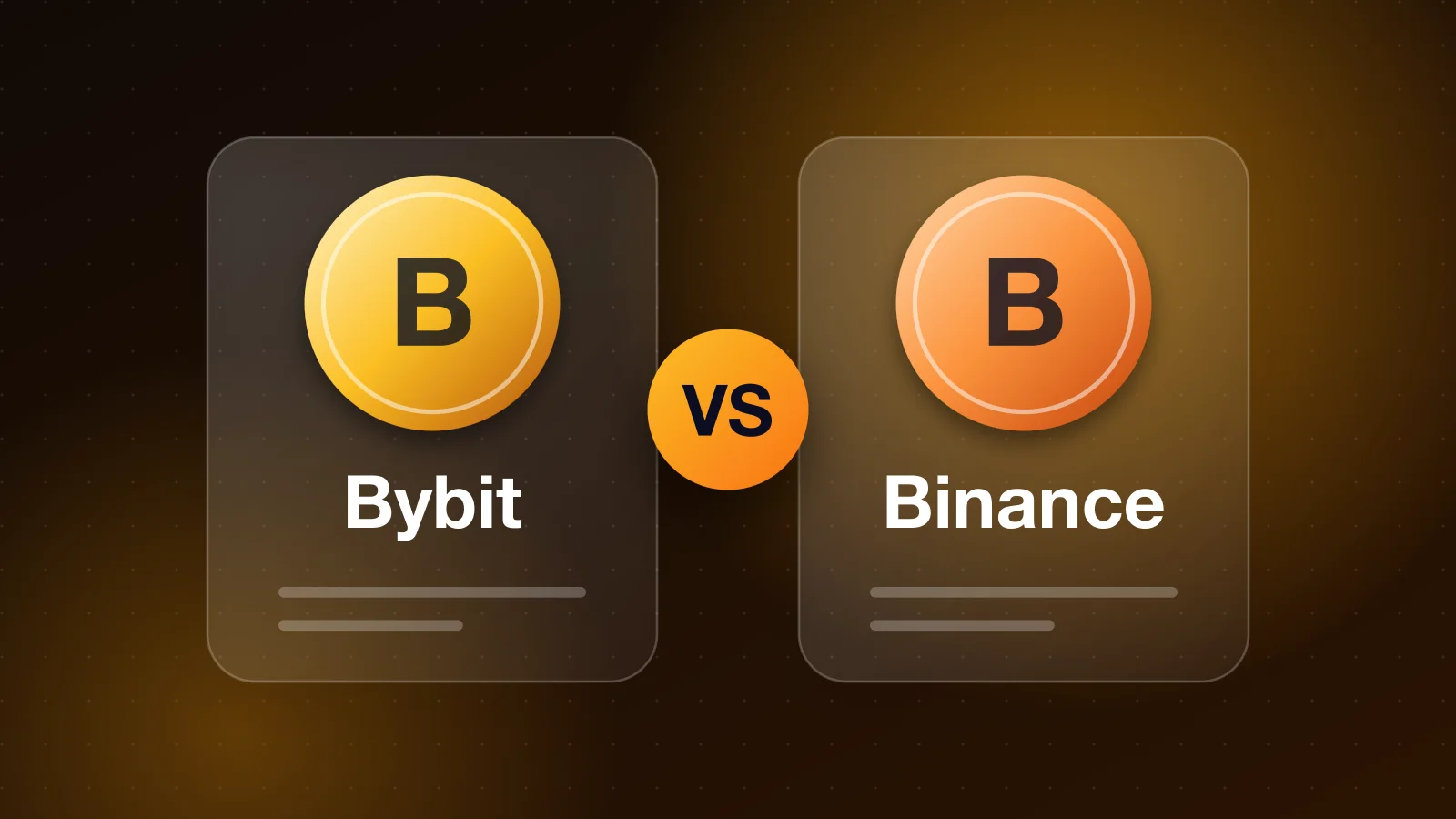
In short: Binance is the largest exchange, with the widest choice of coins and the most ways to pay. Bybit focuses on derivatives and advanced trading tools. Spot fees on both are around 0.1%. For simply buying and holding, Binance is the more general-purpose choice; Bybit is aimed at active traders. Both have had serious incidents, so read the security section before you deposit.
Side by side
| Binance | Bybit | |
|---|---|---|
| Spot fee | 0.10% (0.075% when paying fees in BNB) | around 0.1% (indicative) |
| Choice of coins | very wide | wide |
| Futures and derivatives | yes | a core strength |
| Payments | cards, bank transfer and P2P, depending on your country | cards and bank transfer, fewer local options |
| Best for | buying, holding and general trading | active derivatives traders |
The figures come from our reviews of Binance and Bybit. Fees depend on trading volume and how you buy, so check them on the exchange. Availability also depends on the country where you live.
Fees
Spot trading, buying and selling at the current price, costs around 0.1% on both exchanges. The difference shows up in volume discounts and in the fees for depositing with a card or withdrawing. Binance offers a discount if you pay fees with its own token, BNB. See How to cut Binance fees for more tips.
Products and features
Binance offers hundreds of coins, staking, peer-to-peer trading and a broad ecosystem. Bybit is strong in derivatives and copy trading. For holding Bitcoin and Ethereum either is enough. If you are after a lesser-known coin, check that the exchange lists it before you deposit money.
Derivatives are risky
Futures and leveraged trading let you win or lose several times the amount you put in. Small traders often lose money doing it. If you are inexperienced, start with spot buying. The same principles of leverage are explained in What is a CFD.
Security and track record
On both, turn on two-factor authentication, preferably with an app rather than SMS, and keep larger amounts in your own hardware wallet. On an exchange you do not hold the private keys.
- Binance: in 2023 it pleaded guilty to US anti-money-laundering and sanctions charges and agreed to a settlement of about $4.3 billion, and it has had security incidents in the past.
- Bybit: in February 2025 about $1.5 billion of Ether was stolen from one of its cold wallets. The exchange said it covered the shortfall.
Neither record is a reason to panic, but both are a reason not to leave more on an exchange than you can afford to have unavailable.
What to choose
- Binance: for buying, holding and everyday trading, where it is available to you.
- Bybit: for experienced derivatives traders.
- A regulated local exchange: for a simple first purchase in your own currency. See our comparison of crypto exchanges.
Sign-up and verification step by step
- Create an account with your email and a strong password you do not use anywhere else.
- Turn on two-factor authentication with an app and save the backup codes.
- Complete identity verification (KYC): an ID document and a selfie.
- Set an anti-phishing code if the exchange offers one, so genuine emails can be told from fake ones.
- Deposit a small test amount and try a purchase and a withdrawal before sending more.
Typical situations and what to pick
- I want to buy Bitcoin and hold it for years. Any large exchange will do, followed by your own wallet.
- I want to buy small amounts regularly. Look for automatic recurring buys and low card-deposit fees.
- I want to trade derivatives. Bybit is built for it, but it is a high-risk activity.
- I want many lesser-known coins. Check the exchange really lists them, and beware of scam projects: How to spot a crypto scam.
Security checklist
- Use a unique password and a password manager.
- Open the exchange through its official app or a saved bookmark, not through a link in an email.
- Turn on the withdrawal address allow-list.
- Never share verification codes or your seed phrase with anyone.
How to move crypto between exchanges
On the receiving exchange copy the deposit address and choose the same network you will use to send. A wrongly chosen network can mean lost funds. Send a small test amount first, wait for it to arrive and only then move the rest. Expect a withdrawal fee.
Frequently asked questions
Which exchange has lower fees?
Spot fees are around 0.1% on both. Discounts, trading volume and the deposit method make the difference.
Can I have an account on both?
Yes, many people use both. Remember that for tax purposes you combine your gains from all exchanges.
Is it safe to leave crypto on an exchange?
It is convenient but risky. Keep larger amounts in your own wallet.
A neutral comparison for information only, not investment advice. Crypto assets are highly risky. Exchange terms change, so verify them with the provider.