Where to Invest $500 a Month: An Illustrative Plan
How to split a monthly amount: build a reserve and pay off debts first, then invest regularly, mostly in a diversified equity ETF and partly in safer products. An illustration, not personal advice.
In short: first an emergency fund of 3 to 6 months of expenses and repayment of expensive debt. Only then invest regularly: most into a broadly diversified equity ETF, part into safer products depending on your horizon. The example below is an illustration and not personal advice.
Step 1: Reserve and debts
Before you invest, hold a reserve of 3 to 6 months of expenses in an easily accessible account. Pay off expensive debt, such as an overdraft or consumer credit, first. The interest on debt is usually higher than what you can reasonably expect from investing.
Step 2: Set a goal and a horizon
Money for a goal in two years (a car, a holiday) does not belong in stocks. Long-term goals ten years or more away (retirement, housing) can tolerate more swings. The horizon decides the mix of stocks and safer products.
Step 3: An illustrative split of $500
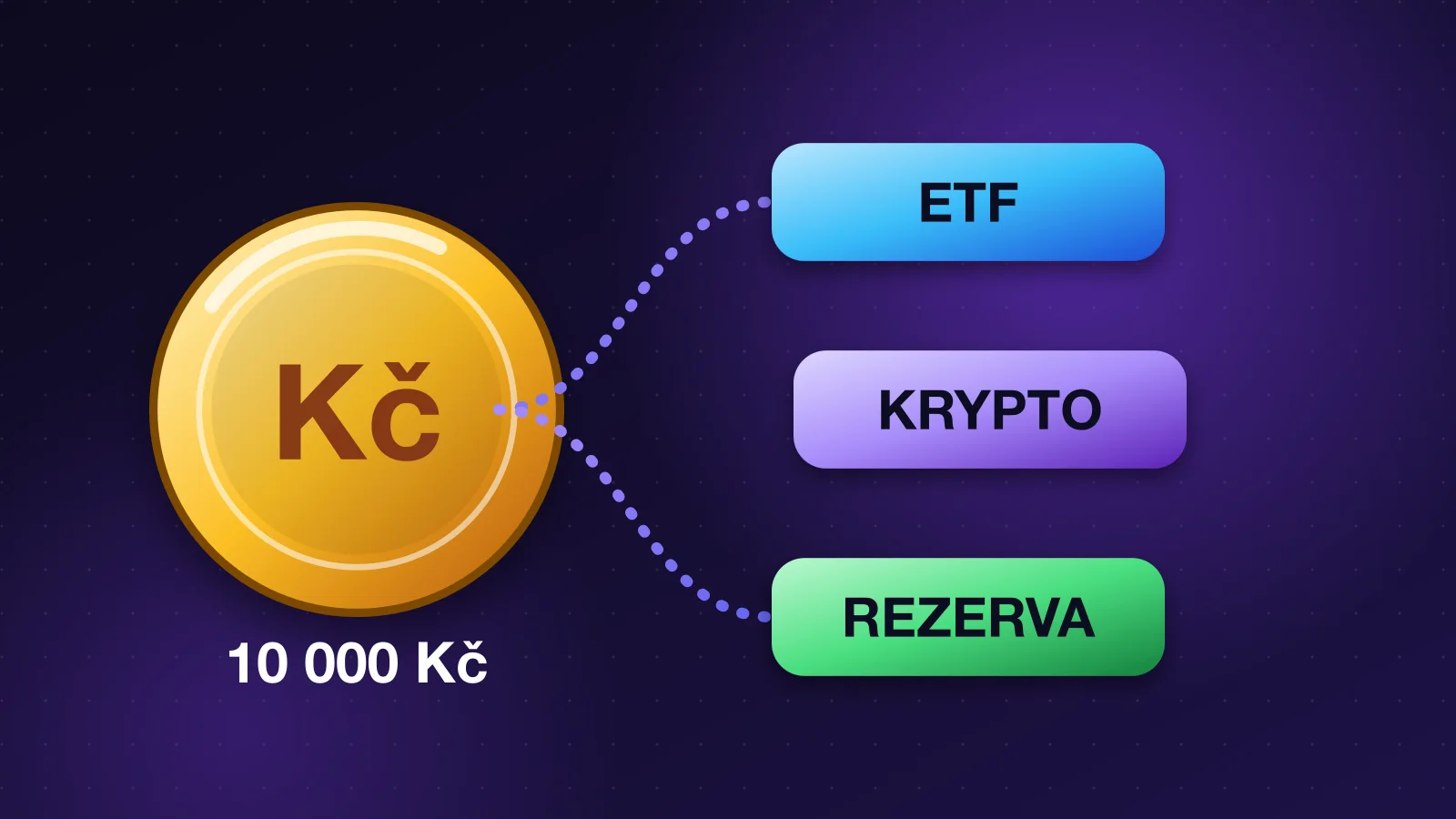
An example for someone with a long horizon and a finished reserve:
| Part | Monthly amount | Purpose |
|---|---|---|
| World equity ETF | $350 | long-term growth |
| Safer part (savings account, bonds) | $100 | stability, short-term goals |
| Top-up of the reserve or a free part | $50 | until the target reserve is reached |
It is only an illustration. Adjust the split to your age, horizon, income and tolerance for risk. If you already have a reserve, the safer part can be smaller.
Step 4: Choose the tools
- ETFs: see What is an ETF and How to invest in the S&P 500.
- Broker: our neutral broker comparison, Trading 212 vs XTB and DEGIRO vs Trading 212.
- The safer part: Savings accounts, term deposits and bonds.
Step 5: Automate
Set up a standing order and a regular purchase on payday. Regularity removes the need to time the market. The principle is dollar-cost averaging, and the effect of time is explained in How compound interest works. Try your own numbers in the compound interest calculator.
What about crypto
Crypto assets are riskier than stocks. If you want them, set aside only a small part that you can afford to lose, and read How to spot a crypto scam.
Frequently asked questions
Is $500 a month enough?
Regular deposits of this size add up over decades. The result depends on how markets perform and is not guaranteed.
Should I repay my mortgage first or invest?
It depends on the mortgage interest rate and your tolerance for risk. At a high rate, repaying can be attractive. For your own situation it is wise to consult a professional.
Should I invest a lump sum or regularly?
Regular investing reduces the risk of bad timing and is easier psychologically.
Can I lose money?
Yes. The value of equity investments fluctuates and can fall by tens of percent in the short term.
An illustration for information only, not personal investment advice. Investing is risky and you can lose part or all of your investment.